
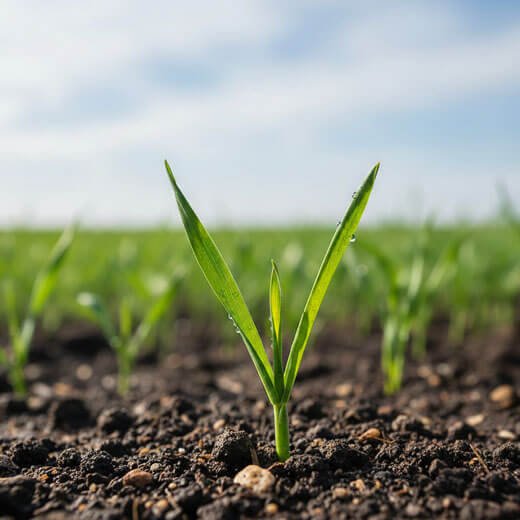
Description
-
Botanical Name: Triticum aestivum
-
Common Name: Wheat
-
Type: Cereal crop, staple food grain
-
Growth Habit: Annual grass; grows quickly from seedling to mature plant in 3–6 months depending on variety
-
Seedling Stage: Healthy seedlings are 10–15 cm tall with strong, green shoots and well-developed roots
-
Planting Season: Best planted in Rabi season (October–December) for most regions; can vary according to local climate
-
Soil Requirement: Prefers well-drained loamy or alluvial soils with good fertility; tolerates pH 6–7.5
-
Sunlight Requirement: Requires full sunlight for optimum growth
-
Watering Needs: Moderate; consistent moisture during early growth stages ensures healthy tillering
-
Nutrient Requirement: Benefits from nitrogen, phosphorus, and potassium-rich fertilizers for robust growth
-
Environmental Adaptability: Tolerates cool and moderately dry conditions; seedlings adapt well to transplanted fields
-
Growth Duration: Seedling to harvest usually takes 90–150 days depending on variety
-
Yield Potential: Strong seedlings lead to healthy tillers and higher grain yield per hectare
-
Usage: Ideal for farmers, agricultural nurseries, and home gardening; can be used for field transplantation or hydroponic wheat cultivation
-
Key Advantage: Healthy wheat seedlings provide a strong foundation for high-quality grain production, disease resistance, and sustainable farming
Summary: Wheat seedlings are the critical first step in producing a healthy, high-yield crop. Proper care at the seedling stage ensures strong plants, better harvests, and long-term soil health.

Reviews
There are no reviews yet.