
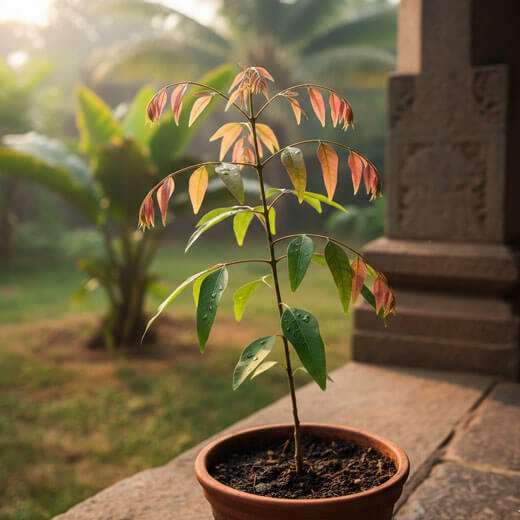
Description
-
Botanical Name: Saraca asoca
-
Common Name: Ashoka Tree
-
Type: Evergreen flowering tree
-
Height on Maturity: 7–10 meters
-
Growth Rate: Moderate, thrives well in tropical and subtropical climates
-
Soil Preference: Well-drained loamy or sandy soil, tolerates clay soil
-
Sunlight Requirement: Full sun to partial shade
-
Watering Needs: Regular watering during initial growth; drought-tolerant once established
-
Climate: Prefers warm, humid conditions; sensitive to frost
-
Flowering Season: Late spring to early summer
-
Flower Color: Bright orange-red to yellow clusters, fragrant and ornamental
-
Foliage: Dense green leaves, provides good shade
-
Uses & Benefits:
-
Ornamental: Ideal for gardens, parks, and avenue plantations
-
Medicinal: Bark, flowers, and seeds used in Ayurvedic remedies for gynecological and other health benefits
-
Cultural Significance: Sacred tree in Indian traditions; often planted near temples
-
Environmental: Enhances biodiversity by attracting pollinators like bees and butterflies
-
-
Planting Guidelines:
-
Dig a hole twice the size of the sapling root ball
-
Mix organic compost with soil for better growth
-
Water regularly for the first 2–3 months to ensure establishment
-
-
Maintenance Tips:
-
Prune dead or weak branches annually
-
Apply organic fertilizer during the growing season
-
Protect young saplings from strong winds and pests
-
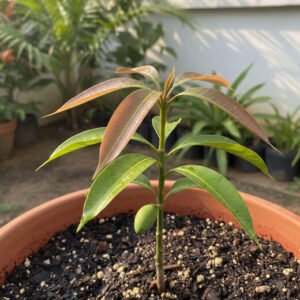
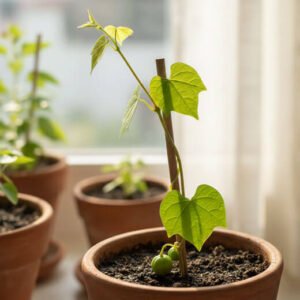
Summary: The Ashoka Tree Sapling is a culturally significant, medicinal, and ornamental tree, perfect for enhancing the beauty of gardens and public spaces while offering ecological and health benefits.
Reviews
There are no reviews yet.